Income Tax vs GST in India: Rules, Differences, Registration and Filing Guide (2026)
By FinanceBlogg Editorial Team
Published 11 min read
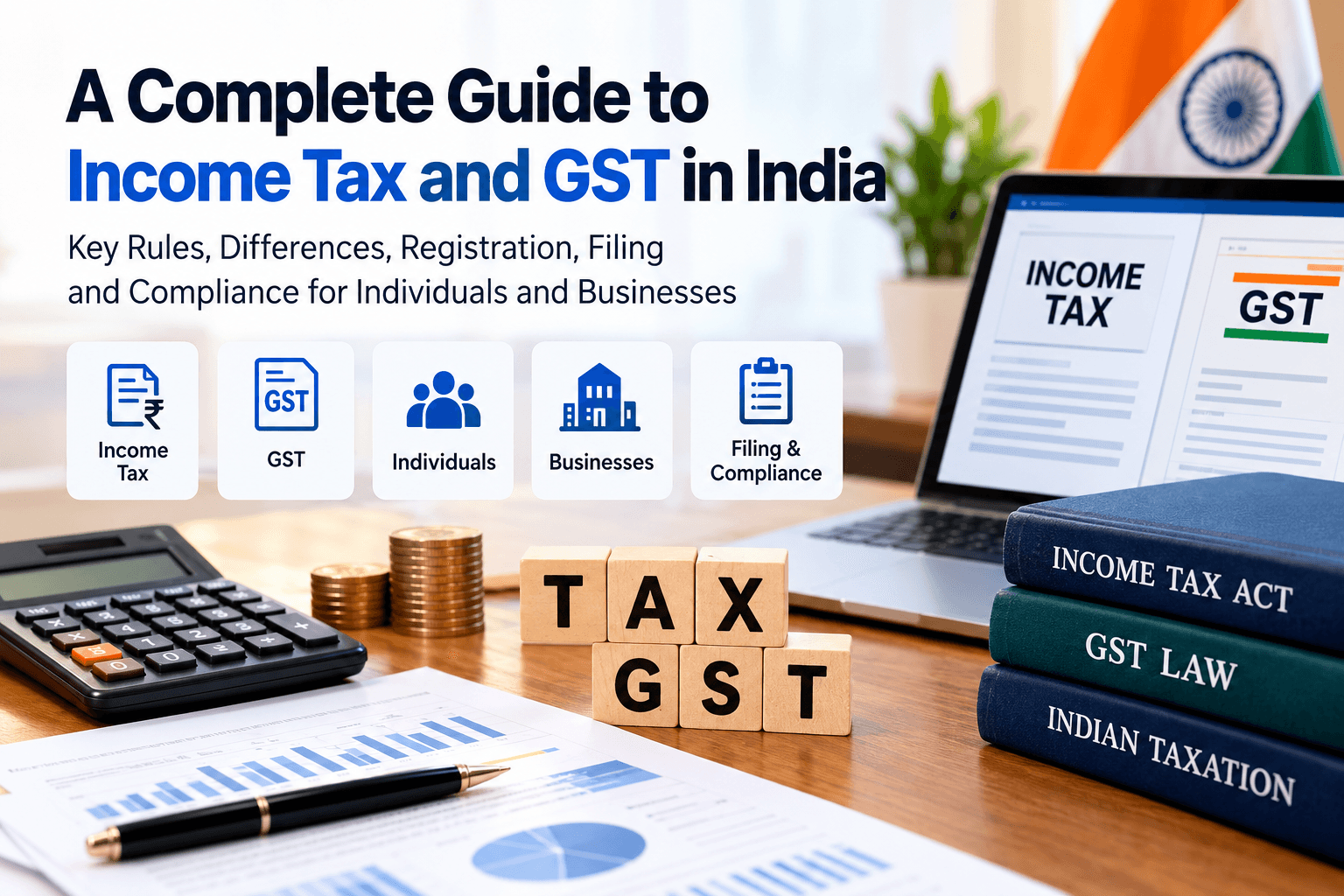
Income Tax vs GST in India: Rules, Differences, Registration and Filing Guide (2026)
Last updated: October 2026
Income tax and Goods and Services Tax (GST) are two important parts of India's taxation system. Whether you are a salaried employee, freelancer, online seller or small business owner, understanding how these taxes work can help you manage your money and avoid common compliance mistakes.
However, income tax and GST are not the same. Income tax generally applies to taxable income, while GST applies to taxable supplies of goods and services under the applicable GST rules.
In this guide, we explain the difference between income tax and GST in India, who needs to pay them, when GST registration may be required, how tax returns work and what records you should maintain in 2026.
Table of Contents
- What is income tax in India?
- What is GST in India?
- Income Tax vs GST: Key Differences
- Income Tax Rules in 2026
- Who Needs to Register for GST?
- How GST Registration Works
- How to File an Income Tax Return
- How GST Return Filing Works
- Common Tax and GST Mistakes to Avoid
- Frequently Asked Questions
1. What Is Income Tax in India?
Income tax is a direct tax charged on taxable income according to the applicable income-tax law. Depending on the taxpayer, income may come from salary, business or professional activities, house property, investments or other sources.
For example, a salaried employee may earn income from employment, while a freelancer may earn fees from providing design, software development or consulting services.
Their tax liability depends on their income, eligible deductions or reliefs, applicable tax regime and other relevant rules.
Who may need to file an income tax return?
You may need to file an income tax return if you meet the applicable filing conditions. These can include:
- Your income exceeds the applicable basic exemption limit.
- You meet a specific mandatory-filing condition.
- You have business or professional income subject to applicable filing requirements.
- You need to report income, claim a refund or reconcile tax deducted at source (TDS).
- Another condition under the applicable law requires you to file.
Important: Filing requirements are not determined by the basic exemption limit alone. Certain taxpayers must file even when their income is below that limit.
What is the difference between the old and new tax regimes?
The new tax regime generally provides different tax rates with fewer deductions and exemptions. The old regime permits various deductions and exemptions subject to their respective conditions.
The new regime is the default for eligible taxpayers, but the old regime may remain available depending on the taxpayer's circumstances and applicable rules.
Compare the regimes using your actual income, eligible deductions, exemptions and other applicable adjustments instead of choosing one based only on its tax slabs.
2. What Is GST in India?
Goods and Services Tax is an indirect tax on the supply of goods and services. It is collected and administered under India's GST framework.
GST may apply to businesses supplying taxable goods or services, subject to registration requirements, exemptions, special provisions and other applicable conditions.
For example, a registered business selling taxable products may charge GST on its invoices. An eligible registered business may also claim input tax credit on qualifying business purchases, subject to GST rules.
Main types of GST
CGST — Central Goods and Services Tax
Generally applies alongside SGST or UTGST to an intra-state taxable supply.
SGST — State Goods and Services Tax
Generally applies to intra-state supplies and is collected for the relevant state.
UTGST — Union Territory Goods and Services Tax
Applies alongside CGST to eligible intra-territory supplies in the relevant Union Territories.
IGST — Integrated Goods and Services Tax
Generally applies to inter-state supplies and certain other transactions covered by the IGST framework.
The applicable treatment depends on the nature and place of supply. The GST rate also depends on the specific goods or services and relevant notifications.
3. Income Tax vs GST: Key Differences
| Feature | Income Tax | GST |
|---|---|---|
| Type of tax | Direct tax | Indirect tax |
| Main basis | Taxable income | Taxable supplies |
| Common taxpayers | Individuals, professionals and businesses | Businesses and other suppliers covered by GST rules |
| Typical compliance | Income tax return and applicable tax payments | GST registration, returns and tax payments where applicable |
| Rate structure | Depends on taxpayer, income and applicable regime | Depends on the goods or services and applicable classification |
| Main portal | Income Tax e-Filing portal | GST Portal |
Can a business pay both income tax and GST?
Yes. A business may have income tax obligations based on its taxable income and separate GST obligations arising from its taxable supplies.
For example, a small consulting business may earn professional income that is considered when calculating income tax. If its activities and turnover trigger GST registration requirements, it may also need to charge and report GST.
These obligations are separate. Paying GST does not automatically satisfy income tax obligations, and filing an income tax return does not replace GST compliance.
4. Income Tax Rules in 2026
India's Income-tax Act, 2025 came into force on 1 April 2026. The filing framework for earlier income periods and the rules for income earned from April 2026 onward must be distinguished carefully.
For Tax Year 2026–27, the following new-regime slab structure applies to eligible individual taxpayers, subject to the applicable provisions:
| Taxable income | New-regime rate |
|---|---|
| Up to ₹4,00,000 | Nil |
| ₹4,00,001–₹8,00,000 | 5% |
| ₹8,00,001–₹12,00,000 | 10% |
| ₹12,00,001–₹16,00,000 | 15% |
| ₹16,00,001–₹20,00,000 | 20% |
| ₹20,00,001–₹24,00,000 | 25% |
| Above ₹24,00,000 | 30% |
These are marginal slab rates, not flat rates applied to the entire income. The final tax calculation can include rebates, surcharge, cess and other applicable provisions.
Does income up to ₹12 lakh mean zero tax?
Eligible resident individuals may qualify for a rebate under the new regime when their income meets the relevant conditions. The rebate can reduce income tax to zero in qualifying cases.
However, this is not a universal exemption for everyone earning ₹12 lakh or less. Eligibility, the nature of income, special-rate income and other statutory conditions matter.
Always check the current official provisions before calculating your final tax liability.
Which tax regime should you choose?
Consider these factors before deciding:
- Your annual taxable income.
- Eligible deductions and exemptions.
- Your investment and insurance-related tax benefits, where applicable.
- The treatment of your business or professional income.
- Whether you can switch regimes under the applicable rules.
The best choice depends on your individual circumstances, not simply on which regime has lower headline rates.
5. Who Needs to Register for GST?
GST registration requirements depend on aggregate turnover, the nature of the supply, the state or Union Territory, and specific provisions that may apply to the business.
For many businesses, the general threshold framework includes:
- Services: A commonly applicable threshold is ₹20 lakh in aggregate annual turnover, with a lower threshold in certain states.
- Goods: A threshold of up to ₹40 lakh may apply in eligible states for businesses exclusively supplying goods, subject to conditions and notified exceptions.
These are not universal limits for every business. Special-category state rules, compulsory-registration provisions, inter-state transactions, e-commerce activities, exemptions and other exceptions can affect the result.
Example: A small online business
Suppose an online seller has aggregate turnover of ₹18 lakh in a financial year.
It would be incorrect to conclude automatically that GST registration is unnecessary. The seller must check the nature of the goods or services, applicable state threshold, sales channels, transaction types and any relevant registration exceptions.
Before relying on a turnover threshold, verify the current CGST Act, applicable notifications and GST Portal guidance.
6. How to Register for GST
Businesses that need GST registration can begin through the official GST Portal.
Basic registration process
- Visit https://www.gst.gov.in/ (opens in a new tab).
- Open the Services section and select Registration.
- Choose New Registration.
- Enter the required taxpayer details, state, business name and PAN-related information.
- Complete the requested verification and application details.
- Upload the required documents and submit the application.
- Track the application status and respond to any clarification request.
The exact documents depend on the business structure and circumstances. They may include PAN, identity and address details, proof of the principal place of business, bank details and business constitution documents.
Do not submit inaccurate information or assume that registration is approved merely because an application has been submitted.
7. How to File an Income Tax Return
Income tax return filing allows eligible taxpayers to report their income, claim eligible tax benefits, reconcile tax credits and calculate the tax payable or refund due.
Documents to prepare
Depending on your income sources, useful records may include:
- PAN and Aadhaar details, where applicable.
- Salary slips and Form 16.
- Bank interest certificates and statements.
- Form 26AS and the Annual Information Statement (AIS).
- Capital gains statements, where relevant.
- Business or professional income and expense records.
- Details of eligible deductions and tax payments.
General filing steps
- Visit https://www.incometax.gov.in/ (opens in a new tab).
- Log in and select the relevant return-filing service.
- Select the correct tax year or assessment-year option as required by the portal.
- Choose the appropriate return form based on your income and circumstances.
- Verify pre-filled information against your own records.
- Report all relevant income, deductions, credits and tax payments.
- Pay any remaining tax, where required.
- Submit the return and complete verification within the applicable time limit.
For income earned in Tax Year 2026–27, follow the new-law framework and the applicable portal instructions. Earlier income periods may still require the corresponding previous-year and assessment-year process.
8. How GST Return Filing Works
Registered businesses must comply with the GST return requirements applicable to their registration and tax scheme.
Common GST compliance forms include:
GSTR-1: Reports details of outward supplies, subject to the applicable filing rules.
GSTR-3B: A summary return used to report relevant tax liabilities, eligible input tax credit and tax payments.
GSTR-4: Relevant to eligible taxpayers under the composition scheme, subject to the applicable requirements.
The exact return, frequency and due date depend on the taxpayer's category, filing scheme and current notifications.
Basic GST compliance checklist
- Maintain accurate sales and purchase invoices.
- Reconcile sales records with outward-supply reporting.
- Review eligible input tax credit carefully.
- Check tax liability before filing.
- Pay applicable tax within the prescribed deadline.
- Reconcile books of accounts with GST returns.
- Monitor portal notices and outstanding returns.
Do not assume that every GST-registered taxpayer has the same filing frequency or return obligations.
9. Common Tax and GST Mistakes to Avoid
Mistake 1: Confusing income tax with GST
These taxes have different purposes and compliance requirements. Track them separately.
Mistake 2: Assuming low turnover always means no GST registration
Certain transactions and statutory provisions can change the registration requirement.
Mistake 3: Ignoring TDS and AIS mismatches
Check tax credits and reported transactions against your records before submitting your return.
Mistake 4: Claiming ineligible input tax credit
Input tax credit is subject to statutory conditions and restrictions. Maintain supporting invoices and verify eligibility.
Mistake 5: Missing filing deadlines
Late filing may result in applicable late fees, interest or other consequences. Confirm the current deadline for your specific return.
Mistake 6: Using outdated tax information
Tax laws, forms, thresholds, notifications and portal processes can change. Verify the rules applicable to the relevant tax period.
Mistake 7: Mixing personal and business records
Maintain clear documentation of business income, expenses, invoices, bank transactions and tax payments.
10. Frequently Asked Questions
Is GST the same as income tax?
No. Income tax is generally based on taxable income, while GST applies to taxable supplies of goods and services under the applicable rules.
Can an individual pay income tax without GST registration?
Yes. Many salaried individuals and other taxpayers have income tax obligations without needing GST registration. GST registration is assessed separately.
Does every freelancer need GST registration?
No. The answer depends on turnover, the nature and location of supplies, customer arrangements and applicable registration provisions.
Can a business be required to file both income tax and GST returns?
Yes. A business may have separate obligations under the income-tax and GST frameworks.
Where can I check official tax information?
Use the Income Tax Department's official portal at https://www.incometax.gov.in/ (opens in a new tab) and the GST Portal at https://www.gst.gov.in/ (opens in a new tab). For GST legislation and notifications, also consult the official CBIC tax information portal at https://taxinformation.cbic.gov.in/ (opens in a new tab).
Final Thoughts
Understanding income tax and GST is an important part of managing personal finances and running a compliant business in India. The two systems work differently, and the requirements that apply to you depend on your income, business activities, transactions and the relevant tax period.
Keep your records organised, check official notifications and reconcile your tax information before filing. When your circumstances involve complex business transactions, international income or uncertain registration requirements, consult a qualified tax professional.
Editorial disclaimer: This article is intended for general educational purposes only. It is not personalised tax, legal or accounting advice. Tax provisions, filing forms, thresholds and deadlines may change. Verify the rules applicable to your situation using official sources before taking action.
About the author
FinanceBlogg Editorial Team
Editorial Team
The FinanceBlogg editorial team researches and writes educational explainers on personal finance in India. Articles are based on official sources such as the Reserve Bank of India, SEBI, IRDAI and the Income Tax Department, and are updated when rules change.
View profile and articlesSpotted an error? Read our corrections policy and tell us.
Related articles
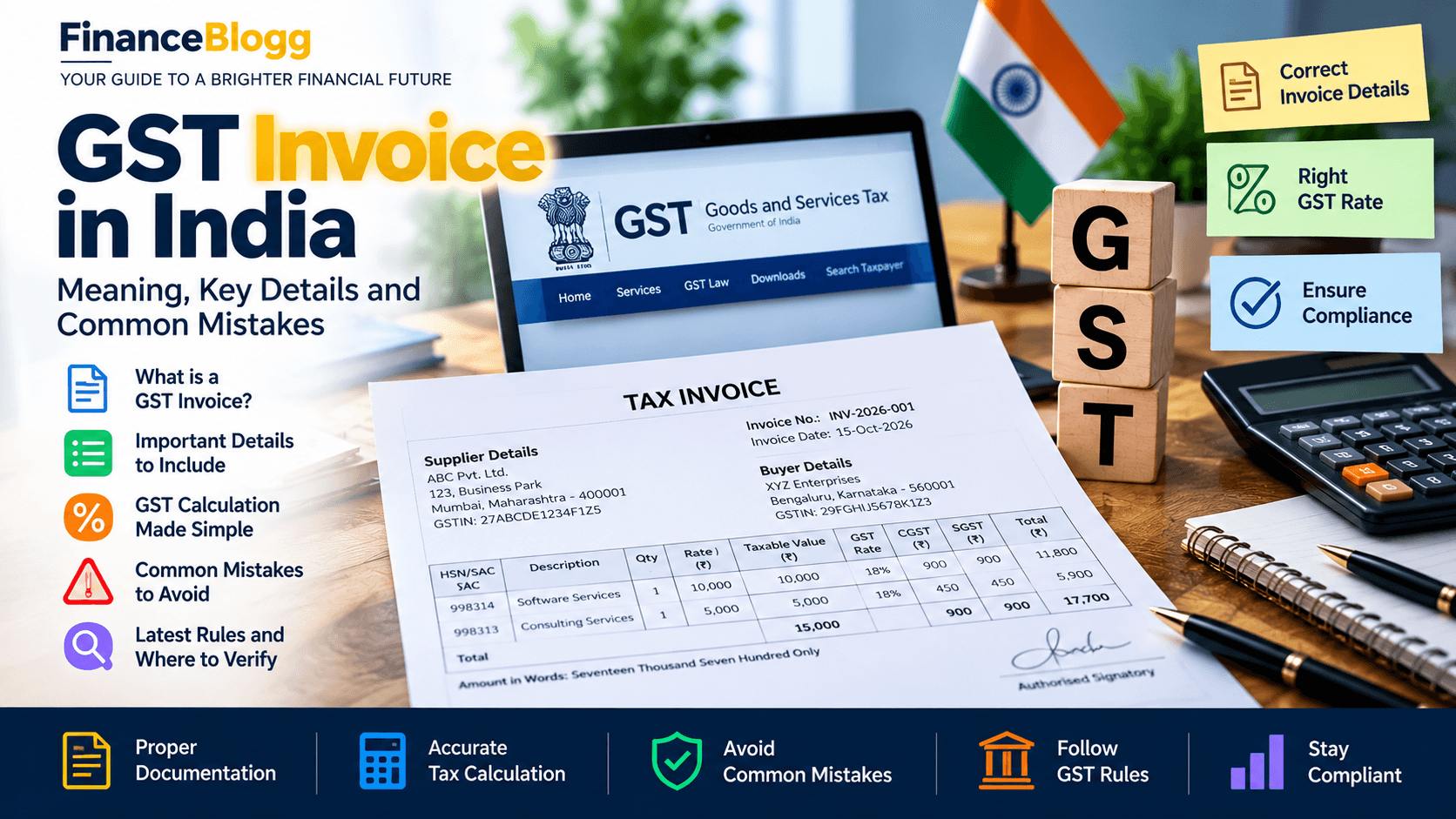
GST Invoice in India: Meaning, Key Details and Common Mistakes
Learn what a GST invoice is in India, the important invoice details, tax calculation basics, common mistakes and where to verify GST compliance.
· 4 min read

How to Read Form 26AS and the Annual Information Statement
How to read Form 26AS and AIS in India: TDS credits, reported transactions, mismatches, and the checks to make before you file your income tax return.
· 6 min read

How to Read Form 16
How to read Form 16 in India: Part A and Part B, TDS, exemptions, and how to match it with Form 26AS before filing.
· 4 min read