How to Save Money on an Irregular Income in India: A Practical Step-by-Step Plan
By FinanceBlogg Editorial Team
Published 9 min read
Editorially reviewed by FinanceBlogg Editorial Team on . How we review articles

How to Save Money on an Irregular Income in India: A Practical Step-by-Step Plan
Saving money can feel difficult when your income changes every month. Freelancers, small business owners, commission-based workers and people who depend on seasonal work may earn well in one month and much less in the next.
A fixed monthly savings target does not always work for these households. The better approach is to build a flexible system that covers essential expenses first, prepares for low-income months and saves more when earnings are stronger.
This guide explains how to save money on an irregular income in India without relying on unrealistic targets or cutting every small pleasure from your life.
1. Calculate Your Essential Monthly Expenses
Start by identifying how much money your household needs to function each month.
Include expenses such as:
- Rent or home-related costs.
- Groceries and essential household supplies.
- Electricity, water, phone and internet bills.
- Transport and necessary fuel expenses.
- School fees and family responsibilities.
- Insurance premiums and existing loan EMIs.
- Essential medical and other recurring costs.
Separate essential expenses from optional spending, such as entertainment, non-essential shopping and subscriptions you rarely use.
For example, if your essential monthly expenses are ₹22,000, that amount gives you a starting point for planning low-income months. Your own figure will depend on your household, location and responsibilities.
Review your bank statements and payment history over several months rather than estimating everything from memory.
2. Build a Budget Around a Conservative Income Estimate
When earnings fluctuate, planning around your best month can lead to overspending.
Instead, review the money you actually received over the past six to twelve months, if that information is available. Identify your weaker months and more reliable income sources.
Use a conservative estimate for essential spending. Do not assume that an expected invoice, bonus, commission or business payment will arrive until it is received.
A useful approach is to divide your spending plan into three groups:
Needs: Essential household expenses and required repayments.
Future protection: Emergency savings and money set aside for known upcoming bills.
Wants: Discretionary purchases that can be reduced when income falls.
This structure gives you room to adapt without rebuilding your entire budget every month.
3. Use a Percentage-Based Savings Rule as a Starting Point
A fixed savings amount can be difficult to maintain when income changes. A percentage-based approach may be more practical, provided you prioritise essential expenses first.
Consider this illustrative example:
| Money received in a month | 10% savings example |
|---|---|
| ₹20,000 | ₹2,000 |
| ₹35,000 | ₹3,500 |
| ₹50,000 | ₹5,000 |
| ₹70,000 | ₹7,000 |
These amounts are examples, not mandatory savings targets. If your income barely covers essentials, it may be necessary to save less temporarily. If your essential costs are already covered and you have surplus income, you may be able to save more.
The important habit is to review your situation whenever money arrives and transfer an affordable amount towards your savings goal.
4. Create a Separate Emergency Fund
An emergency fund is money reserved for unexpected events such as a medical bill, urgent home repair, essential travel or a temporary loss of income.
It should be separate from the money you use for routine shopping and monthly bills.
A common starting guideline is to work towards three to six months of essential expenses. People with highly variable earnings, dependants or limited income protection may need to consider a larger buffer.
Suppose your essential monthly expenses are ₹22,000:
| Emergency fund target | Illustrative amount |
|---|---|
| 1 month | ₹22,000 |
| 3 months | ₹66,000 |
| 6 months | ₹1,32,000 |
You do not need to build the full amount immediately. Start with a manageable first milestone, then increase it as your finances allow.
Keep emergency money accessible and consider the safety, liquidity and terms of the account or deposit you choose. Money needed at short notice should not be exposed to unnecessary market risk.
5. Prepare for Annual and Irregular Bills
Many budgets fail because people account for monthly expenses but forget bills that arrive once or twice a year.
Examples include insurance renewals, school-related costs, vehicle servicing, festival spending, professional fees and annual subscriptions.
Make a list of known expenses, their approximate amounts and due dates.
For instance, if you expect a ₹12,000 annual expense in twelve months, setting aside ₹1,000 per month can help you prepare for it.
This is planned spending rather than emergency savings. Keeping the two separate makes it easier to see whether you are prepared for both predictable bills and genuine surprises.
6. Control Spending Without Making Your Budget Unrealistic
Saving does not require eliminating every enjoyable activity. A plan that is too restrictive can be difficult to maintain.
Instead, look for recurring expenses that provide little value.
Try these practical steps:
- Review subscriptions and cancel unused services.
- Compare mobile, internet and insurance options when renewal is due.
- Plan grocery purchases around a list.
- Avoid buying non-essential items immediately when income arrives.
- Set a reasonable discretionary spending limit.
- Review recurring digital payments and automatic debits.
For non-essential purchases, a waiting period of 24 to 48 hours can help you distinguish a genuine need from an impulse.
Do not sacrifice necessary healthcare, suitable insurance or essential maintenance just to make a savings target look better.
7. Decide What to Do When You Have a High-Income Month
A stronger month can provide an opportunity to improve financial stability.
Before increasing your lifestyle spending, consider whether you need to:
- Catch up on essential bills.
- Refill money used from your emergency fund.
- Set aside money for upcoming annual expenses.
- Pay down expensive debt according to a considered repayment plan.
- Add to longer-term savings once immediate needs are covered.
For example, a freelancer who receives a large client payment may need to reserve part of it for business expenses, tax obligations and upcoming household costs before treating the remainder as available income.
Money that appears to be surplus may already have a purpose.
8. Keep Short-Term Savings Separate From Long-Term Goals
Not every financial goal needs the same type of account.
Money for next month's bills or an emergency should generally be accessible when needed. A goal several years away may allow a different savings or investment approach, depending on your risk tolerance and time horizon.
When comparing savings accounts or deposits, review:
- Interest rates and how they are applied.
- Minimum balance requirements.
- Fees and withdrawal conditions.
- Premature closure rules for deposits.
- Deposit protection and applicable eligibility conditions.
In India, eligible bank deposits are covered by DICGC insurance subject to its rules and limits. Check the official DICGC guidance to understand how coverage applies to your deposits and accounts.
Do not choose a product based only on its advertised return. Liquidity, safety, tax treatment and access to your money also matter.
9. Review Your Progress Once a Month
You do not need to track every transaction forever to benefit from a savings plan. Start with a simple monthly review.
Ask yourself:
- How much money did I actually receive?
- What did I spend on essentials?
- Which expenses were higher than expected?
- Did I set aside money for upcoming bills?
- Did I add to or withdraw from emergency savings?
- What adjustment would make next month easier?
If your income is highly variable, review your plan whenever a major payment arrives as well as at the end of the month.
The goal is not to achieve a perfect budget. It is to understand your cash flow early enough to make better decisions.
A Simple 30-Day Savings Plan
Week 1: Understand your money. Review income received, essential expenses, subscriptions and upcoming bills.
Week 2: Set your priorities. Choose a realistic savings amount and identify your first emergency-fund milestone.
Week 3: Separate your savings. Where practical, use an appropriate separate account or clearly designated savings balance so that the money is not confused with routine spending.
Week 4: Review and adjust. Check what worked, what was difficult and whether your next month's target needs to change.
Repeat the process for the next month. Consistent reviews can be more useful than an ambitious target that becomes impossible to maintain.
Frequently Asked Questions
How much should I save every month in India?
There is no single amount that suits every household. Start with your actual income, essential expenses, debt obligations and emergency needs. Save an affordable amount consistently and increase it when your financial position improves.
How can I save money if my income changes every month?
Build your budget around essential costs, use conservative income estimates, set aside money when payments arrive and prepare for low-income months. Avoid committing to a savings amount that requires borrowing to cover necessities.
Should I save money or repay debt first?
Consider the cost of your debt, the consequences of missed payments and whether you have any emergency savings. Expensive debt deserves serious attention, but having no accessible reserve can leave you vulnerable to the next unexpected expense. Your circumstances determine the balance.
Where should I keep my emergency fund?
Prioritise accessibility, capital safety and a clear understanding of account terms. Compare suitable bank accounts or other appropriate low-risk options rather than chasing the highest advertised return. Check applicable deposit protection and withdrawal conditions.
What if I cannot save anything in a particular month?
First cover essential needs and required repayments. Review avoidable expenses and focus on preventing new high-cost debt. If a small saving is possible, begin there; if not, resume when your circumstances allow. A temporary pause does not make your overall plan a failure.
Final Thoughts
Saving on an irregular income is less about earning the same amount every month and more about giving each payment a clear purpose.
Understand your essential costs, plan for predictable bills, maintain an accessible emergency reserve and adjust your savings target as your income changes. When earnings improve, use some of the additional money to strengthen your financial position rather than automatically increasing spending.
A flexible savings system can help you manage uncertainty without depending on every month being a good one.
Editorial note: This article provides general financial education for readers in India. Savings products, interest rates, tax rules and deposit-protection conditions can change. Verify current details with official institutions before making a financial decision.
About the author
FinanceBlogg Editorial Team
Editorial Team
The FinanceBlogg editorial team researches and writes educational explainers on personal finance in India. Articles are based on official sources such as the Reserve Bank of India, SEBI, IRDAI and the Income Tax Department, and are updated when rules change.
View profile and articlesSpotted an error? Read our corrections policy and tell us.
Related articles
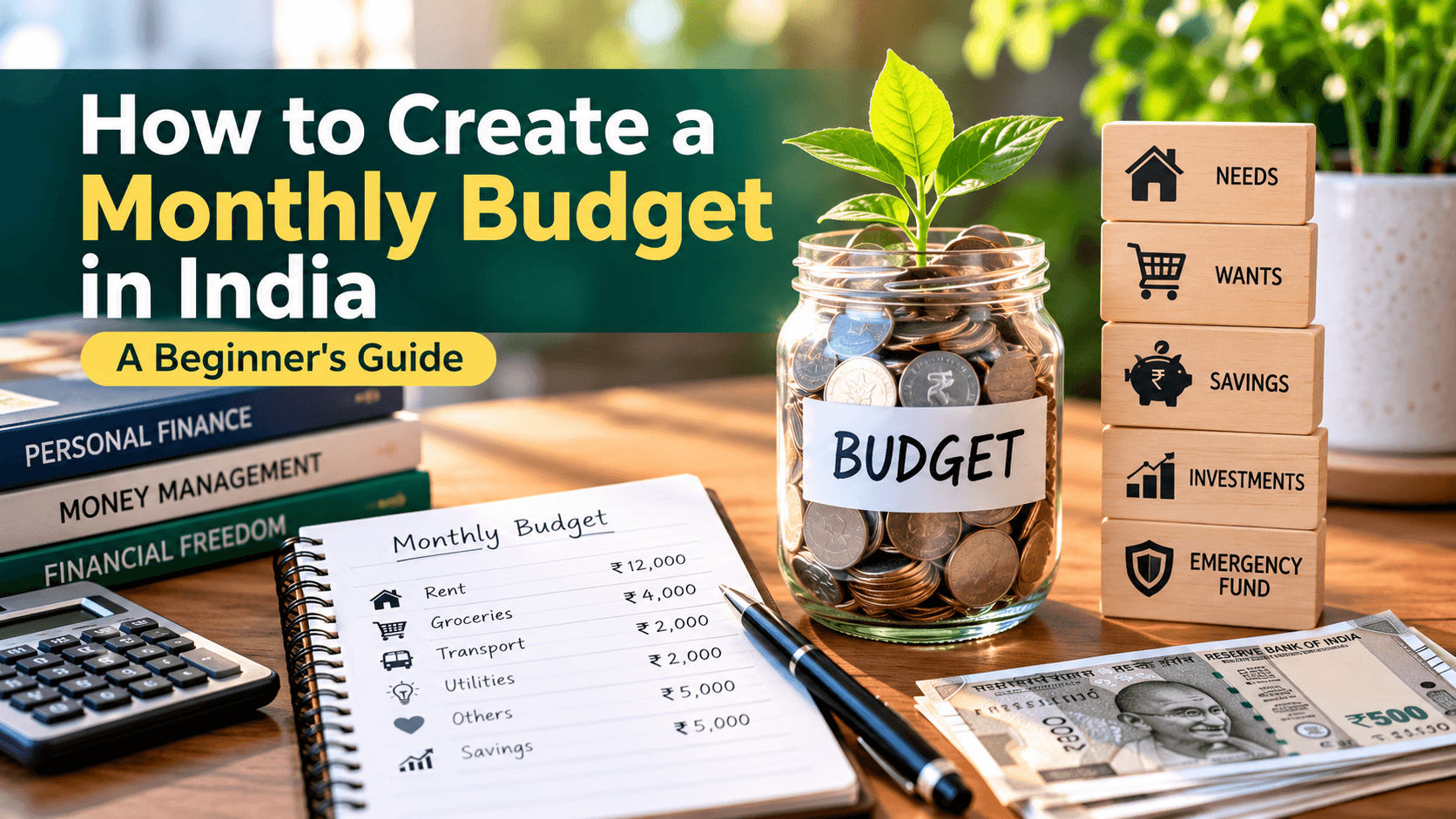
How to Create a Monthly Budget in India: A Beginner's Guide
Learn how to create a monthly budget in India, manage expenses, save money regularly and build better financial habits with a simple step-by-step guide.
· 4 min read
How the Public Provident Fund Works in India
How the Public Provident Fund works in India: tenure, yearly limit, interest, withdrawals, tax treatment and who it suits.
· 5 min read
How Recurring Deposits Work
How a recurring deposit works in India, how interest is applied, how RDs differ from FDs and SIPs, and what to check on tenure, TDS and premature closure.
· 6 min read