How to Choose the Right Savings Account in India: Fees, Minimum Balance and Hidden Charges
By FinanceBlogg Editorial Team
Published 7 min read
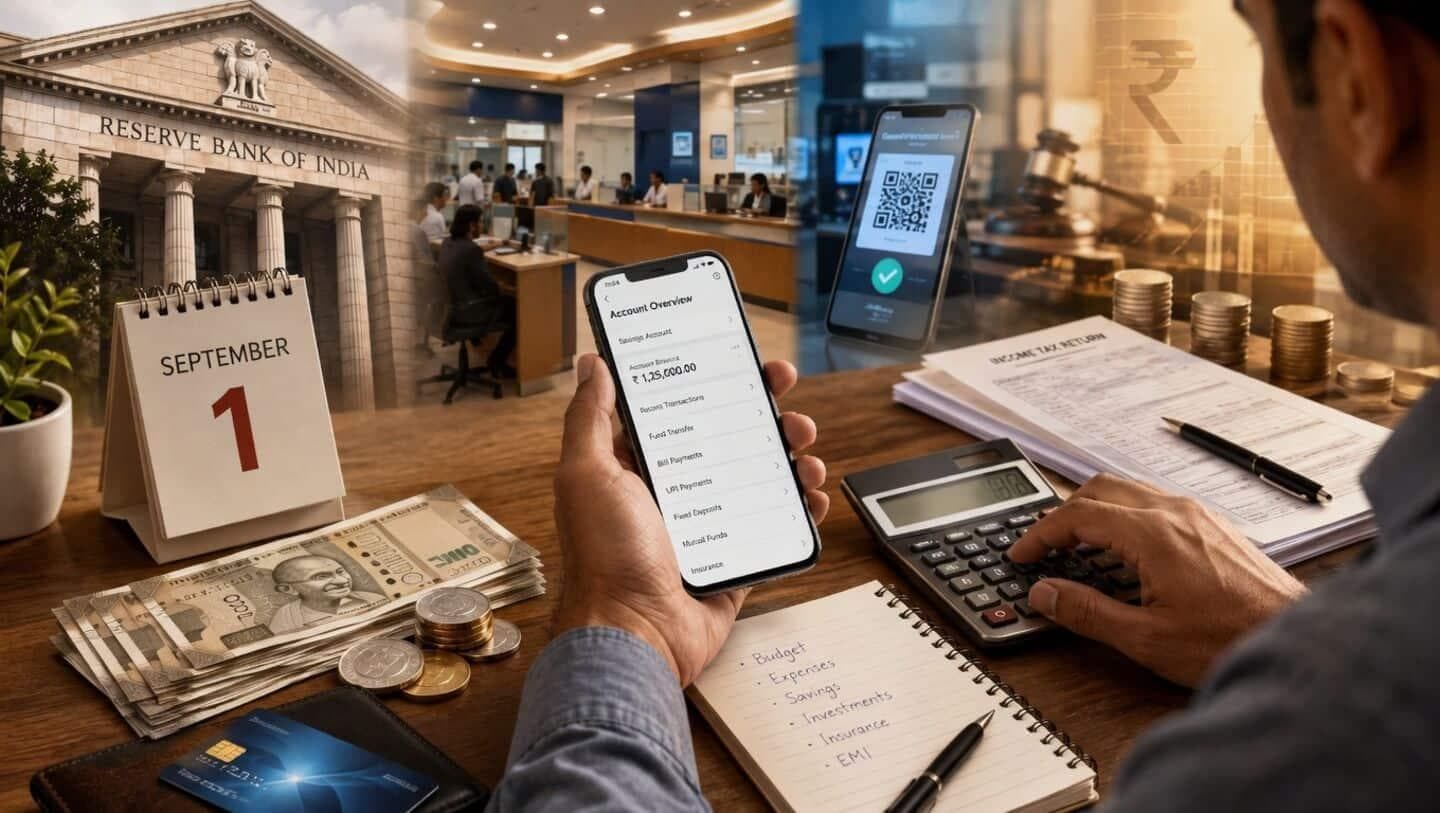
How to Choose the Right Savings Account in India: Fees, Minimum Balance and Hidden Charges
Opening a savings account is one of the first steps towards managing personal finances. However, choosing a bank account only because a bank advertises a high interest rate or offers a free debit card can lead to unnecessary expenses later.
The right savings account should fit your income, spending habits, cash requirements and preferred banking methods. For some people, a basic account with no minimum balance requirement may be sufficient. Others may benefit from a regular savings account with better branch access, digital services or additional features.
This guide explains how to compare savings accounts in India, understand common banking charges and identify the features that matter before applying.
1. Understand the Different Types of Savings Accounts
Not every savings account has the same requirements. Banks offer different account variants for different customers.
Regular savings account
A regular savings account generally provides deposits, withdrawals, debit card access, online banking and other standard services. Depending on the bank and account variant, you may need to maintain a minimum or average balance.
Zero-balance savings account
A zero-balance account allows eligible customers to maintain a zero balance without incurring a minimum-balance shortfall charge. However, other fees may still apply depending on the account terms.
Some accounts have transaction limits, eligibility conditions or restrictions on additional facilities. Read the specific product terms rather than assuming that every zero-balance account offers identical benefits.
Salary savings account
A salary account is typically opened through an employer's banking arrangement. It may provide benefits such as a waived minimum-balance requirement while salary credits continue.
Ask what happens if salary credits stop. The account may be converted to another account variant under the bank's applicable terms.
Basic Savings Bank Deposit Account
A Basic Savings Bank Deposit Account, or BSBD Account, is intended to provide essential banking access with no minimum balance requirement, subject to applicable RBI rules and eligibility conditions.
It is worth exploring if your main priority is basic banking rather than premium services. Check the current rules and restrictions directly with the bank.
2. Compare Minimum Balance Requirements
Minimum balance rules can make a noticeable difference to your banking costs.
Banks may specify a monthly average balance, quarterly average balance or another requirement depending on the account. The applicable rules can also vary by branch category and product.
Before opening an account, ask these questions:
- Is there a minimum balance requirement?
- Is the requirement calculated monthly or quarterly?
- What happens if the balance falls below the required amount?
- Are there exemptions for particular customers or account types?
- Can the bank offer a suitable account without a minimum-balance requirement?
Do not rely solely on an advertisement saying “free account.” Check the account's official schedule of charges.
3. Check These Banking Charges Before Applying
An account with a low minimum balance is not automatically the cheapest account overall.
| Charge | What to check |
|---|---|
| Debit card | Issuance, annual fee and replacement fee |
| ATM withdrawals | Free transaction limits and charges beyond them |
| Cash services | Charges for cash deposits or withdrawals, where applicable |
| Cheque book | Free leaves and additional-book charges |
| SMS alerts | Whether alerts are free or chargeable |
| Account services | Duplicate statements, certificates and other service fees |
| Non-maintenance | Whether a balance shortfall charge applies |
| Transfers | Applicable limits or fees for specific transfer methods |
Charges differ across banks and account variants. Some services are free up to specified limits, and regulatory rules may affect how particular charges are applied.
Practical tip: Download the latest schedule of charges from the bank's official website before opening an account.
4. Compare Savings Interest Rates Carefully
Interest rates matter, but they should not be the only factor in your decision.
Suppose two accounts offer different annual interest rates. The actual interest you earn will depend on the balance maintained, the applicable rate, the bank's interest-calculation and crediting terms, and any tax implications.
For example, on an illustrative balance of ₹50,000:
- At 2.5% per year, the simple annual interest equivalent is ₹1,250.
- At 3.0% per year, the simple annual interest equivalent is ₹1,500.
The difference is ₹250 before tax, assuming the same balance throughout the year and ignoring compounding and other calculation details.
These rates are examples for calculation purposes, not current offers from any particular bank.
Compare the official rates, eligibility requirements and account fees. A slightly higher rate may not compensate for costs or inconvenient account conditions.
5. Evaluate Mobile Banking and UPI Features
Digital banking can make everyday money management easier.
Before choosing an account, check whether the bank provides:
- A reliable mobile banking application
- UPI registration and payments
- IMPS, NEFT and RTGS facilities, as applicable
- Downloadable account statements
- Debit card controls and transaction limits
- Instant transaction notifications
- Simple card-blocking and complaint-reporting options
Consider how quickly you can report an unauthorised transaction or disable a lost card. Access to clear support channels is important even if you rarely visit a branch.
Never share your OTP, PIN, CVV or banking password with anyone. Use official banking apps and websites, and avoid accessing banking services through public or unsecured networks.
6. Check Deposit Protection
Deposit safety is another factor to consider.
Eligible deposits held with an insured bank in India are covered by the Deposit Insurance and Credit Guarantee Corporation (DICGC) up to ₹5 lakh per depositor per bank, including principal and interest, subject to applicable rules.
The limit is not automatically ₹5 lakh for every account separately. Eligible deposits held by the same person in the same bank are generally aggregated in the same right and capacity, including across branches.
If you maintain substantial deposits, understand how this aggregation works before deciding where to keep your money.
For the official details, consult DICGC: https://www.dicgc.org.in/ (opens in a new tab)
7. A Simple Checklist for Comparing Two Banks
Before submitting your application, compare the accounts side by side.
| Feature | Bank A | Bank B |
|---|---|---|
| Minimum balance | Check official terms | Check official terms |
| Savings interest rate | Verify current rate | Verify current rate |
| Debit card annual fee | Check schedule | Check schedule |
| ATM transaction rules | Check limits | Check limits |
| Mobile banking | Test features and reviews | Test features and reviews |
| Branch or ATM access | Check nearby availability | Check nearby availability |
| Customer support | Review contact options | Review contact options |
| Deposit insurance | Verify insured-bank status | Verify insured-bank status |
Choose the account that fits your actual usage rather than the one with the most promotional benefits.
8. Common Mistakes to Avoid
Choosing only by interest rate: Fees, access and account conditions also matter.
Ignoring the minimum balance: A requirement that looks small can become inconvenient when your income fluctuates.
Assuming every zero-balance account is identical: Eligibility, transaction facilities and service terms can differ.
Overlooking debit card fees: A card advertised as free may have conditions or a later annual charge.
Ignoring customer support: The ability to resolve failed transactions and report fraud is important.
Opening too many accounts without a purpose: Multiple accounts can make it harder to monitor balances, statements and dormant-account requirements.
Frequently Asked Questions
Which savings account is best for beginners in India?
The best account depends on your needs. Beginners who want simple banking may prefer an account with clear fees, convenient digital access and suitable minimum-balance rules. Compare official account terms before applying.
Is a zero-balance savings account completely free?
Not necessarily. A qualifying zero-balance account removes the minimum-balance requirement, but other services may have charges depending on the account terms.
Can I open a savings account online?
Many banks offer online applications, including video KYC where available. Eligibility, documents and activation requirements vary by bank.
Does a higher savings interest rate always mean a better account?
No. Compare interest rates alongside account charges, accessibility, transaction facilities and the conditions attached to the account.
How can I verify a bank's charges?
Visit the bank's official website and read the latest schedule of charges and account-specific terms. If a fee is unclear, ask the bank to explain it before applying.
Final Thoughts
A good savings account should help you manage money conveniently without unnecessary costs. Compare minimum balance rules, interest rates, service charges, digital banking features and deposit protection before making a decision.
The best account is not necessarily the one with the most features. It is the one whose conditions match your financial habits and everyday needs.
Editorial note: Banking products, fees and regulatory requirements can change. Verify current information through the relevant bank and official regulatory sources before acting.
Disclaimer: This article is for general educational purposes and does not constitute personalised financial advice.
About the author
FinanceBlogg Editorial Team
Editorial Team
The FinanceBlogg editorial team researches and writes educational explainers on personal finance in India. Articles are based on official sources such as the Reserve Bank of India, SEBI, IRDAI and the Income Tax Department, and are updated when rules change.
View profile and articlesSpotted an error? Read our corrections policy and tell us.
Related articles
How to Set Financial Goals in India
Turn vague money wishes into dated rupee amounts, with Indian examples for EMIs, school fees, festivals, emergency savings and retirement.
· 6 min read
CTC vs Take-Home Salary in India
How CTC differs from take-home salary in India: typical deductions, why in-hand is lower, and how to budget from the amount that actually arrives.
· 5 min read

How to Create a Monthly Budget in India
A practical, step-by-step guide to building a monthly budget in India, with a worked example, sinking funds for annual expenses and the limits of popular budgeting rules.
· 7 min read