Co-Applicant vs Co-Borrower vs Guarantor: What's the Difference in India?
By FinanceBlogg Editorial Team
Published 9 min read
Editorially reviewed by FinanceBlogg Editorial Team on . How we review articles

Co-Applicant vs Co-Borrower vs Guarantor: What's the Difference in India?
When applying for a home loan, personal loan or education loan in India, you may come across three terms: co-applicant, co-borrower and guarantor. Although these terms may sound similar, they can involve different financial responsibilities and legal obligations.
For example, a bank may ask your spouse to join your home loan application, or a lender may ask a family member to provide a guarantee. But does becoming a co-applicant mean that person must repay the entire loan? Can a guarantor be held responsible if the borrower stops paying?
Understanding these differences before signing loan documents can help protect your finances and avoid future disputes.
In this guide, we explain the difference between a co-applicant, co-borrower and guarantor in India, their responsibilities, possible credit score impact and what you should check before agreeing to any loan arrangement.
1. What Is a Co-Applicant in a Loan?
A co-applicant is a person who applies for a loan jointly with the primary applicant. Lenders may consider the co-applicant's income, employment, financial profile and repayment capacity when evaluating the application.
For example, if a husband applies for a home loan and includes his wife as a co-applicant, the bank may consider both applicants' incomes when assessing eligibility.
Responsibilities of a Co-Applicant
Depending on the lender's agreement, a co-applicant may:
- Submit income and identity documents.
- Provide consent for credit checks.
- Help establish the household's combined repayment capacity.
- Become jointly responsible for repayment if also named as a co-borrower.
- Be subject to the loan's contractual obligations.
Important: The word co-applicant alone does not establish the full extent of repayment liability. Always check whether the loan agreement also identifies the person as a co-borrower or joint borrower.
2. What Is a Co-Borrower?
A co-borrower is someone who jointly takes responsibility for borrowing money with another person.
Unlike a person who merely participates in the application process, a co-borrower is a party to the borrowing arrangement and has repayment obligations under the loan agreement.
Responsibilities of a Co-Borrower
A co-borrower may be required to:
- Repay the loan according to the agreed terms.
- Pay outstanding amounts if the other borrower fails to make payments.
- Meet the contractual obligations of the loan.
- Provide financial documents and complete lender verification.
- Accept the consequences of missed or delayed repayments.
For example, two siblings jointly borrow ₹30 lakh for a property. If both sign as co-borrowers, their repayment responsibilities will depend on the loan agreement. The lender may have rights against either borrower as specified by the contract.
Does a Co-Borrower Need to Own the Property?
Not necessarily in every lending arrangement. Property ownership requirements depend on the lender's policy, loan type and applicable legal documentation.
For home loans, many lenders require co-borrowers to be co-owners, but this is not a universal rule.
Always confirm the lender's requirements before submitting the application.
3. What Is a Loan Guarantor?
A guarantor is a person who promises to fulfil a borrower's repayment obligations if the borrower defaults, subject to the guarantee agreement.
A lender may request a guarantor when it wants additional assurance that the outstanding loan will be repaid.
For example, a person applying for an education loan may be asked to provide a family member as a guarantor.
The guarantor does not automatically become a co-owner of the property or receive ownership rights simply by signing a guarantee.
Responsibilities of a Guarantor
A guarantor may have to:
- Repay the guaranteed debt if the borrower defaults.
- Pay applicable interest and charges covered by the guarantee.
- Respond to the lender's legal recovery proceedings.
- Accept the financial consequences of the guarantee.
Under Section 128 of the Indian Contract Act, 1872, the liability of a surety is generally co-extensive with that of the principal debtor unless the contract provides otherwise.
This makes signing a guarantee a serious financial decision.
4. Co-Applicant vs Co-Borrower vs Guarantor: Key Differences
| Comparison | Co-Applicant | Co-Borrower | Guarantor |
|---|---|---|---|
| Applies for the loan | Yes | Usually jointly | No, generally |
| Income considered | If lender requires | If lender requires | Depends on lender |
| Repayment responsibility | Depends on contract | Yes, as agreed | On borrower's default, subject to guarantee |
| Credit assessment | Usually | Usually | May be assessed |
| Property ownership | Not automatic | Not automatic | Not automatic |
| Signs loan documents | Depends on role | Yes | Guarantee documents |
| Main purpose | Joint application | Joint borrowing | Additional repayment security |
The exact responsibilities depend on the loan product and signed documents. Some lenders use the terms co-applicant and co-borrower interchangeably.
5. How Do These Roles Affect Your Credit Score?
Your involvement in another person's loan can affect your financial profile.
Co-Applicant and Co-Borrower
If you are legally responsible for a loan, missed EMIs can potentially affect your credit history, even when another person was supposed to make the payments.
For example, if you jointly borrow money with your spouse and the EMI is missed, the repayment history may be reported against the borrowers according to the lender's reporting obligations.
Guarantor
A guarantee can also carry credit-related consequences.
If the borrower defaults, the lender may take recovery action against the guarantor. Any reporting to credit information companies will depend on the applicable reporting rules and the person's actual contractual status.
How to Protect Your Credit Profile
- Check your credit report regularly.
- Make sure EMIs are paid on time.
- Keep copies of the loan and guarantee agreements.
- Ask the lender how the loan will be reported to credit bureaus.
- Follow up immediately if you discover incorrect credit information.
6. Which Is Better for a Home Loan?
The right arrangement depends on the financial situation and ownership structure of the applicants.
Consider these examples:
Situation 1: Husband and wife buying a home
A joint application may allow the lender to consider both incomes. Depending on the lender's rules, both may become co-borrowers.
Situation 2: A parent supporting an adult child's home loan
The parent may be asked to become a co-applicant, co-borrower or guarantor. These roles are not interchangeable, so the actual agreement matters.
Situation 3: A family member providing repayment security
A guarantor arrangement may be considered if the lender permits it and the guarantor understands the potential liability.
Before choosing an arrangement, confirm the lender's eligibility, income and property ownership requirements.
7. Risks of Becoming a Co-Applicant, Co-Borrower or Guarantor
Before signing any loan documents, consider the following risks:
1. Repayment liability
You may become responsible for repayment even if you do not personally use the borrowed money.
2. Credit history impact
Delayed payments and defaults can create difficulties when applying for your own loans.
3. Future borrowing capacity
An existing financial obligation or guarantee may affect how another lender assesses your repayment capacity.
4. Legal recovery
A lender may pursue recovery from a person who has legally accepted repayment or guarantee obligations.
5. Family disputes
Financial disagreements between family members can become complicated when multiple people are involved in one loan.
Never sign loan documents simply because someone is a friend or family member. Understand the legal and financial consequences first.
8. What Should You Check Before Signing Loan Documents?
Use this checklist before accepting any role in a loan:
- Read the complete loan agreement.
- Confirm whether you are an applicant, borrower or guarantor.
- Understand whether your liability is joint, several or limited.
- Check the maximum amount covered by a guarantee.
- Review the interest rate and repayment schedule.
- Understand default charges and recovery provisions.
- Ask how the loan will appear on your credit report.
- Keep copies of all signed documents.
- Obtain written clarification from the lender if any term is unclear.
For digital loans, also review the Key Fact Statement and the lender's disclosures before accepting the loan.
Frequently Asked Questions (FAQs)
1. Is a co-applicant responsible for loan repayment?
It depends on the legal role and documents signed. If the co-applicant is also a co-borrower, they generally have repayment obligations under the loan agreement.
2. Can a guarantor be asked to repay the entire loan?
A guarantor may be liable for the guaranteed debt, including applicable interest and charges, subject to the guarantee agreement and applicable law.
3. Does a guarantor become the owner of the property?
No. Signing a loan guarantee does not automatically provide ownership rights in the financed property.
4. Does becoming a co-borrower affect your CIBIL score?
It can. The loan and its repayment performance may be reflected in your credit history, depending on the lender's reporting and the credit bureau's records.
5. Can I become a guarantor without taking the loan money?
Yes. A guarantor generally provides repayment security without receiving or using the loan proceeds.
6. Can I remove myself as a loan guarantor?
You cannot assume that you can withdraw from an existing guarantee simply by requesting it. The lender's written consent, the guarantee terms and applicable law determine whether release is possible.
7. Can husband and wife apply for a joint home loan?
Yes. Many lenders allow spouses to apply jointly, subject to their eligibility and documentation requirements.
8. Is a co-applicant always a co-borrower?
No. The terminology can vary between lenders. Check the legal definition of each person's role in the loan agreement.
Final Thoughts
A co-applicant, co-borrower and guarantor may all be involved in the same loan, but their financial and legal responsibilities are not necessarily identical.
A co-applicant participates in the loan application, a co-borrower accepts borrowing and repayment obligations, and a guarantor promises to cover the borrower's liability if a default occurs, subject to the guarantee terms.
Before signing any loan agreement, understand exactly what you are agreeing to. A few minutes spent reviewing the documents can help prevent years of financial complications.
Disclaimer: This article is for educational and informational purposes only. It does not constitute financial or legal advice. Loan eligibility, contractual obligations and lender policies may vary. Consult the lender or a qualified professional before signing any loan or guarantee agreement.
References and Further Reading
- Indian Contract Act, 1872 – Section 126 (opens in a new tab)
- Indian Contract Act, 1872 – Section 128 (opens in a new tab)
- Reserve Bank of India (opens in a new tab)
About FinanceBlogg: FinanceBlogg publishes educational guides to help Indian readers understand loans, banking, saving, investing and personal finance.
About the author
FinanceBlogg Editorial Team
Editorial Team
The FinanceBlogg editorial team researches and writes educational explainers on personal finance in India. Articles are based on official sources such as the Reserve Bank of India, SEBI, IRDAI and the Income Tax Department, and are updated when rules change.
View profile and articlesSpotted an error? Read our corrections policy and tell us.
Related articles
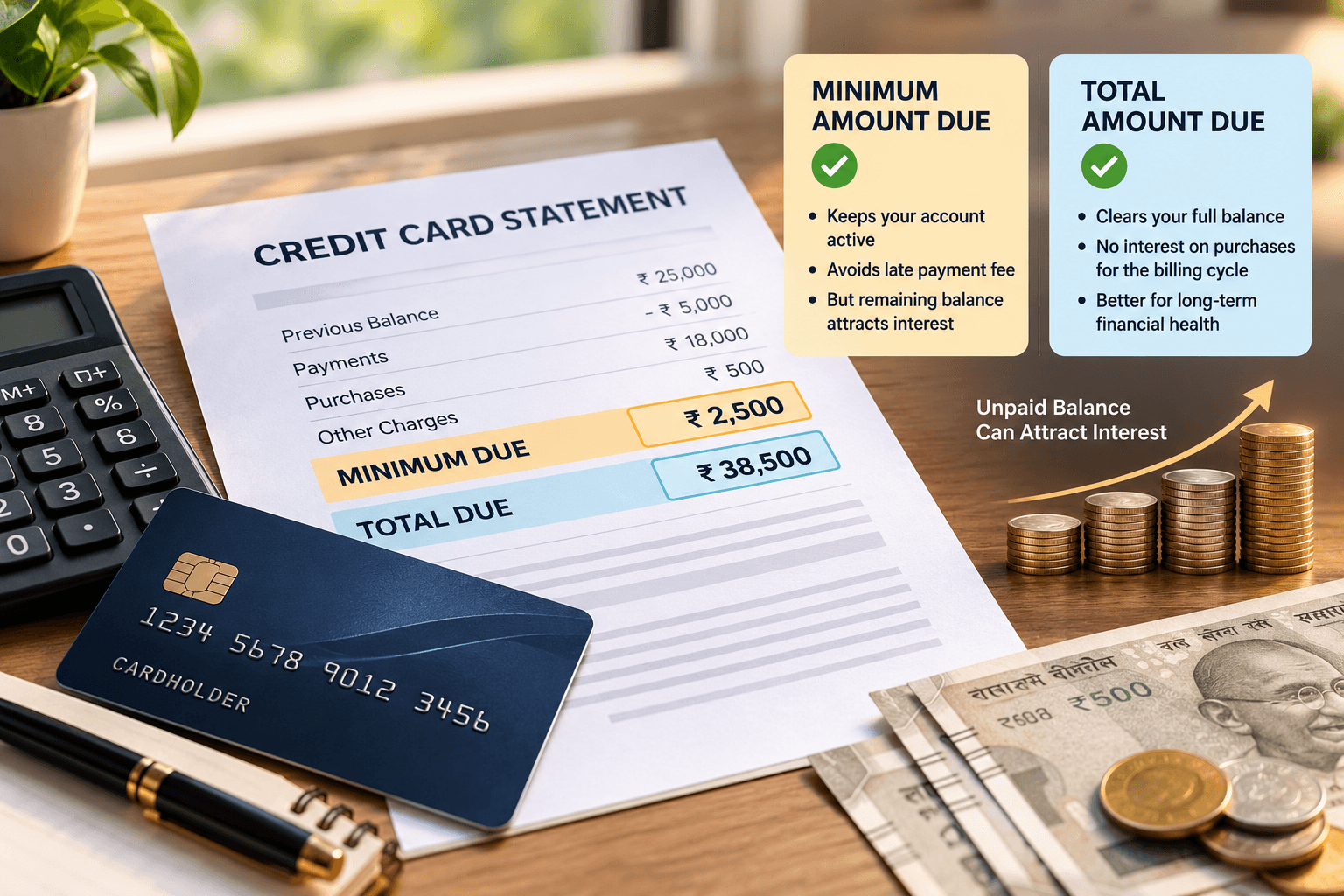
Credit Card Minimum Amount Due vs Total Amount Due in India: What Happens If You Pay Only the Minimum?
Learn the difference between minimum amount due and total amount due on credit cards in India, including interest, late fees and repayment tips.
· 9 min read

Before You Take a Loan in India: 9 Checks to Avoid Costly Borrowing Mistakes
Learn 9 important things to check before taking a loan in India, from total borrowing costs and EMIs to fees, penalties and repayment risks
· 8 min read

How Loan Prepayment and Foreclosure Work
What loan prepayment and foreclosure mean in India, how extra payments change interest, typical charges, and what to check in your sanction letter.
· 6 min read