What Is Drawdown in Investing? How to Understand Investment Losses in India
By FinanceBlogg Editorial Team
Published 7 min read
Editorially reviewed by FinanceBlogg Editorial Team on . How we review articles
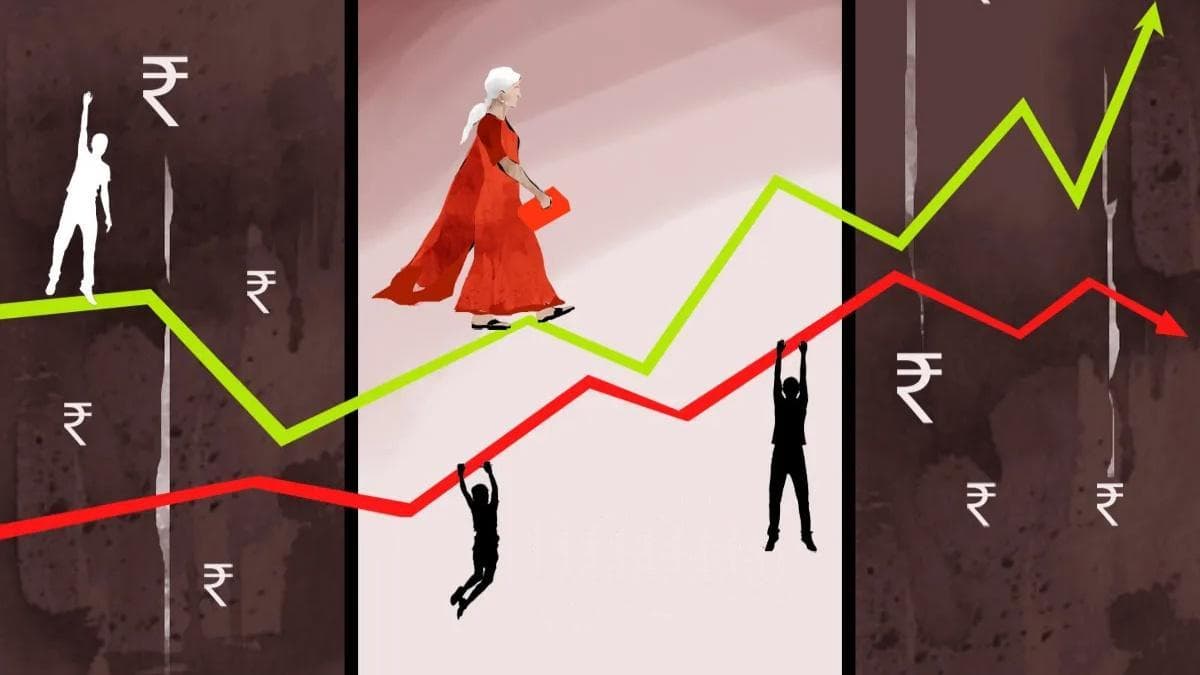
What Is Drawdown in Investing? How to Understand Investment Losses in India
Investing is not always a straight upward journey. The value of stocks, mutual funds and other market-linked investments can rise over time, fall during market corrections and sometimes take months or years to recover.
One important concept that helps investors understand these declines is drawdown.
Whether you invest in individual stocks, equity mutual funds, index funds or other market-linked assets, understanding drawdown can help you evaluate investment risk more clearly.
In this guide, we explain what drawdown means, how to calculate it, why recovering from a loss can be difficult, and how Indian investors can use this concept to understand portfolio performance.
What Is Drawdown in Investing?
Drawdown refers to the decline in the value of an investment from a previous peak to a subsequent lower point.
In simple words, it measures how much an investment has fallen from its highest recorded value before recovering.
For example, suppose you invest ₹1,00,000 in an equity mutual fund. After some time, your investment grows to ₹1,20,000. During a market correction, its value falls to ₹96,000.
Your investment has experienced a drawdown of ₹24,000 from its previous peak.
Drawdowns are common in market-linked investments because prices fluctuate in response to economic conditions, company performance, interest rates and investor sentiment.
How to Calculate Drawdown
The drawdown formula is straightforward:
Drawdown (%) = (Peak Value − Current Value) ÷ Peak Value × 100
Let's understand it with an example.
Suppose an investment reaches a peak value of ₹2,00,000 and later falls to ₹1,70,000.
Drawdown = (₹2,00,000 − ₹1,70,000) ÷ ₹2,00,000 × 100
Drawdown = 15%
This means the investment has declined by 15% from its previous peak.
The calculation uses the previous peak as the reference point, not necessarily the original amount invested.
What Is Maximum Drawdown?
Maximum drawdown, commonly called MDD, measures the largest peak-to-trough decline in an investment's value during a particular period.
It helps investors understand the worst historical decline experienced by an investment over that selected period.
Consider this illustrative example:
| Investment value | Amount |
|---|---|
| Initial investment | ₹1,00,000 |
| Highest value reached | ₹1,50,000 |
| Lowest value after the peak | ₹1,05,000 |
| Maximum drawdown | 30% |
The investment declined by ₹45,000 from its peak of ₹1,50,000.
Maximum drawdown = (₹1,50,000 − ₹1,05,000) ÷ ₹1,50,000 × 100 = 30%.
Maximum drawdown is useful when comparing historical investment behaviour, but it does not predict how much an investment could fall in the future.
Why Recovering From Investment Losses Is Difficult
One of the most important lessons about drawdown is that a percentage loss and the percentage gain required to recover are not equal.
A larger loss requires a disproportionately larger recovery.
Consider the following examples:
| Investment loss | Gain needed to recover |
|---|---|
| 10% | 11.11% |
| 20% | 25% |
| 30% | 42.86% |
| 40% | 66.67% |
| 50% | 100% |
For example, if your ₹1,00,000 investment falls by 50%, its value becomes ₹50,000.
To return to ₹1,00,000, it must gain 100% from the reduced value.
This is why understanding downside risk is just as important as studying potential returns.
Drawdown vs Volatility: What Is the Difference?
Drawdown and volatility are related investment-risk concepts, but they measure different things.
Drawdown measures the decline from a previous peak to a lower value.
Volatility measures how widely investment returns fluctuate over time.
For example, an investment may experience frequent small price movements, resulting in noticeable volatility without necessarily experiencing a very large drawdown.
Another investment may remain relatively stable for some time before experiencing a sharp decline.
Both measures can provide useful information, but neither tells the complete story of investment risk.
What Causes Drawdowns in the Indian Stock Market?
Several factors can cause declines in Indian stocks and mutual fund investments.
1. Market corrections
Broad market declines can affect multiple companies and equity mutual funds simultaneously.
2. Economic uncertainty
Changes in economic growth, inflation, interest rates and business conditions can influence investment prices.
3. Company-specific problems
Poor financial results, management issues, declining sales or increased debt can negatively affect individual stock prices.
4. Interest rate changes
Changes in interest rates can influence bond prices and debt mutual fund valuations.
5. Investor sentiment
Fear, uncertainty and sudden changes in market expectations can increase selling pressure.
These factors may affect different investments in different ways. A diversified portfolio can reduce the impact of some company-specific risks, but it cannot eliminate every market risk.
How Can Investors Understand and Manage Drawdown Risk?
Investors cannot completely prevent market declines, but they can make more informed decisions about the risks they take.
Here are some useful practices:
1. Understand your risk tolerance
Consider how you might react if your investment value declined by 10%, 20% or more. Your ability and willingness to withstand losses are important when evaluating investment choices.
2. Diversify your investments
Avoid depending entirely on one company, sector or asset class. Diversification can help reduce concentration risk, although it does not guarantee protection against losses.
3. Match investments with your financial goals
Money required in the near future may not be suitable for investments that can experience significant market fluctuations.
4. Review historical performance carefully
When studying an investment, look beyond its highest returns. Examine its historical declines, recovery periods and overall performance.
5. Avoid making decisions based only on short-term movements
Emotional decisions during market declines can affect long-term financial plans. Revisit your investment objectives and the reasons behind your original decisions before making changes.
Does a Lower Maximum Drawdown Mean a Better Investment?
Not necessarily.
An investment with a smaller historical maximum drawdown may have experienced fewer or smaller declines during the selected period. However, it may also have delivered lower returns or behaved differently under other market conditions.
When comparing investments, consider several factors together:
- Historical returns
- Maximum drawdown
- Volatility
- Investment costs
- Liquidity
- Investment objective
- Time horizon
Always compare investments over similar periods and understand that historical performance does not guarantee future results.
Frequently Asked Questions
1. What is a good drawdown percentage?
There is no universally good drawdown percentage. What is acceptable depends on the investment type, financial goals, time horizon and an investor's ability to tolerate losses.
2. Is drawdown the same as losing money?
Not exactly. Drawdown measures a decline from a previous peak. Your actual profit or loss compared with your original investment depends on your purchase price and other cash flows.
3. What is a 20% drawdown?
A 20% drawdown means an investment has fallen by 20% from its previous peak. For example, a portfolio declining from ₹1,00,000 to ₹80,000 has experienced a 20% drawdown.
4. Can mutual funds experience drawdowns?
Yes. Mutual fund NAVs can rise and fall depending on the value and performance of the securities held in their portfolios. Equity funds, debt funds and hybrid funds have different risk characteristics.
5. Does maximum drawdown predict future losses?
No. Maximum drawdown describes the worst historical peak-to-trough decline during a particular measurement period. It cannot predict future market movements or guarantee that future losses will remain within the same range.
Final Thoughts
Understanding drawdown is an important part of learning how investment risk works.
Investment performance should not be judged only by how much an asset has gained. It is equally important to understand how much it has declined, how long recovery has taken and whether its risk characteristics are appropriate for your financial goals.
For beginner investors in India, learning concepts such as drawdown, volatility, diversification and asset allocation can create a stronger foundation for making informed financial decisions.
Remember: Every market-linked investment carries risks, and past performance does not guarantee future returns.
Sources and Further Reading
- Securities and Exchange Board of India (SEBI): Key Risks in Investing in Securities Markets (opens in a new tab)
- SEBI Investor: Factors to Consider Before Investing (opens in a new tab)
- Association of Mutual Funds in India (AMFI): Risks in Mutual Funds (opens in a new tab)
- National Institute of Securities Markets (NISM): Understanding Investment Risks and Returns (opens in a new tab)
Disclaimer: This article is for general financial education only. It is not personalised investment advice or a recommendation to buy, sell or hold any financial product. Investments in securities markets are subject to market risks. Please read all relevant documents carefully before investing.
About the author
FinanceBlogg Editorial Team
Editorial Team
The FinanceBlogg editorial team researches and writes educational explainers on personal finance in India. Articles are based on official sources such as the Reserve Bank of India, SEBI, IRDAI and the Income Tax Department, and are updated when rules change.
View profile and articlesSpotted an error? Read our corrections policy and tell us.
Related articles

How to Evaluate an Investment Before You Invest: 7 Essential Checks for Beginners in India
Learn how to evaluate an investment in India with 7 essential checks covering risk, returns, fees, liquidity, diversification and fraud prevention
· 8 min read

Risk vs Return in Investing: What Beginners in India Should Know
Understand investment risk and return, learn how inflation and volatility affect your money, and discover how to assess investment choices in India.
· 4 min read

What Diversification Means for Beginner Investors
What diversification means for beginners: spreading risk across assets, issuers and time, why similar funds do not diversify, and what diversification cannot do.
· 5 min read